
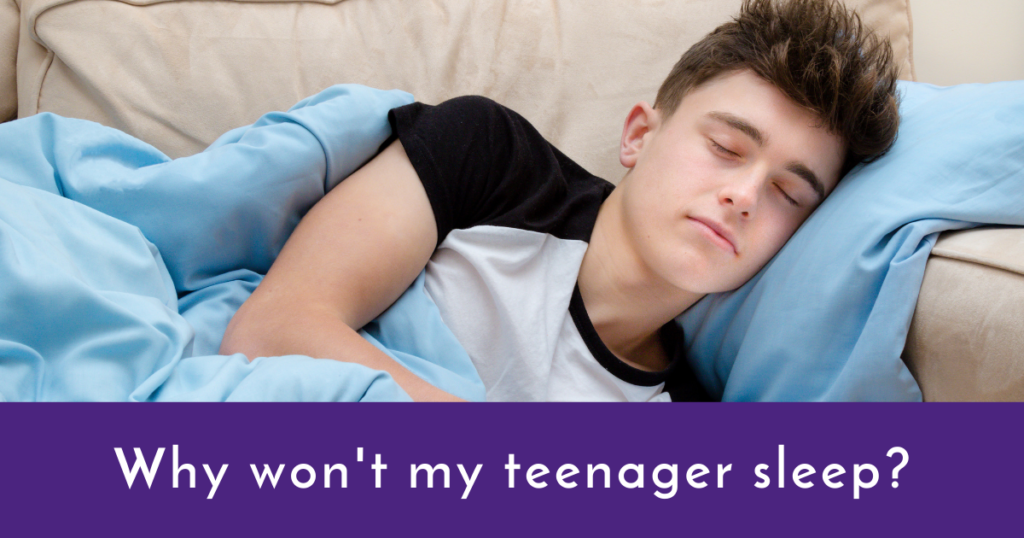
I speak to parents every day and very often they share their concerns about their teenager’s sleep habits and patterns. They worry about them being nocturnal, going to bed late at night and struggling to get up in the morning.
I have often heard teens being called ‘lazy’ and associated with sloths, slow moving and never seeming to get anywhere fast.
We know that from a brain perspective, especially during the teenage years, that sleep is the cornerstone of emotional regulation and stability, to help them cope with all the rapid changes going on in their brain, making that shift towards adulthood. It is well documented that without good quality sleep, it is likely that teens may struggle to cope with anxiety, overwhelm, stress and depression.
Here I highlight three main areas to consider when we are struggling with our teen’s nocturnal habits:
1. They are not lazy – honestly!
During the teenage years the brain hits a rapid period of developmental change. You can think of it like a transitional period from being a child to becoming an adult.
During this time there are massive changes going on in their brain. Connections in the teen brain which are no longer needed are being pruned away to make way for new ones as they learn and develop new skills and abilities which will allow them to become increasingly independent from us as their parents. It’s a bit like having a pile of bin bags in the corner of a room, full of un-necessary rubbish not needed any more. Their sleep helps them remove this rubbish, helping them wake up with a more efficient functioning brain.
This is not something they can control, it is something which happens neurologically, and as a consequence, teens do actually need more sleep than they did during their childhood to fuel this rapid pace of development.
So, if your teen is saying they are tired and sleeping late when they can, it may not be all to do with digital distractions or that they are lazy, their body is trying to encourage healthy teenage brain development.
2. Missing the best part of the day?
We naturally base the routines and structures of our sleep cycle on the adult, fully mature brain and expect that when we are ready and awake to face the day, our teens should be too.
‘Missing the best part of the day’ is a phrase I heard often as a teen and I know concerns a lot of parents. The challenge is that the adolescent brain needs to do more maintenance which largely occurs through sleep, they actually need more sleep to maintain peak functioning during the day. Focus and concentration are likely to be affected if a teen does not get enough. We often resist their need to have ‘power naps’ during the day, but they can actually be good for the brain, allowing some processing and downloading to happen, especially after a day of learning. You may struggle with this, being concerned that ‘they won’t sleep tonight’ if they sleep at other points, but it is likely that they will still go to bed later than you would like them to with or without any ‘power naps’ so these opportunities, when taken can actually enhance sleep efficiency and support their brain development.
Allowing teens to sleep more may feel counter-intuitive as a parent, especially when they may have been up with the lark when they were younger but pulling their sleep routine and habits in line with your own is likely to be counter-productive if you are trying to encourage them to engage with family life. I often ask parents to use a frame of reference here, what were their sleep habits and patterns like, what was the difference in the teen years between choosing to get up and getting up because others expect us to?
3. It’s when they learn and consolidate their skills.
Believe it or not, the best part of a teen’s day is late into the evening. Examples from untouched tribes allowed researchers to discover this. This was the time in adolescence where they are preparing for adulthood, discovering new things and actually when their brains are most primed for learning.
We know that the structure and timings of the school day are not conducive to maximise learning for teens, often it will take until late morning for their brains to come fully ‘online’. We know that melatonin, the hormone that is released to produce those sleepy feelings is released later in teens compared to adults and therefore hangs around longer in the morning, this would explain a slower start to the day for our young people.
Many older teens I speak to say they find they are most alert and awake to doing any kind of learning or revision later in the day and into the evening, which fits with this understanding of how adolescents from the tribes maximised their own skills and learning.
The Parenting Challenge
As a mum of teens myself, I know that part of the parenting challenge is achieving that all important balance between acknowledging that our teens do have different sleep patterns and routines, and helping them to manage societal and learning expectations. We don’t want our teens to spend all day in bed, but it is important that we appreciate that their brains need that all important rest to help with their brain maturity and to support their mental as well as physical health.
Sometimes having this understanding ourselves, and helping our teens understand it too, can have a significant impact on how sleep routines are managed, and avoid conflict where possible.
We can’t fight the neuroscience which gives us so much insight into the developing teenage brain. Understanding this can make a massive difference in how we approach the challenge of ensuring they develop a pattern of sleeping and waking which maximises their own learning and developmental opportunities, and helps us, as parents navigate these teenage years.
If you would like to learn more about teenage sleep and have your questions answered, join me for my next online parent education session ‘Navigating Teenage Sleep’ on Thursday 26th May at 10am. The session will be recorded and available for you to watch if you cannot make this specific date and time and any specific questions can be submitted beforehand or answered during the session.
To find out more and to book, click here.